UI/UX design evolves with visual design that brings digital product interfaces to screens. However, modern multimodal UX design has proven the productivity and safety benefits of designing products beyond the screen, using other modes of interaction such as sound, vision, sensing, and haptics. Multimodal UX still uses screen-based interactions in most products, but it doesn’t just focus on designing visuals for the screen — it focuses on designing the right interactions for the context by progressively revealing necessary UI elements. Multimodal UX is about building context-aware products that support multiple modes of human-centered communication beyond traditional input/output mechanisms.
Let’s understand how you can design productive and accessible multimodal products by designing for context, using strategies such as context awareness, progressive disclosure, and fallback communication modes.
Context-aware input/output system
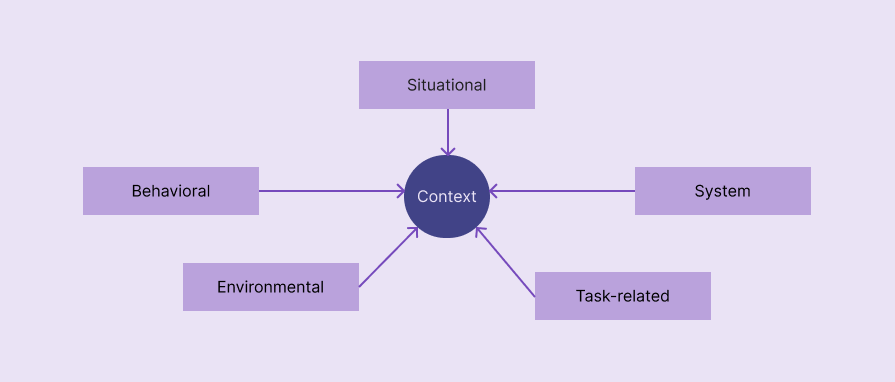
In multimodal products, context refers to the situational, behavioral, system, environmental, or task factors that determine the most appropriate mode of interaction. Multimodal products easily switch interaction modes based on context to improve overall UX.
The following factors determine the fashion context of most multimodal products:
- Situational — Specific activities or situations that define a user’s status. Driving, cooking, and exercising are common situations that require mode switching
- Behavior — How users interact with the system. Past interaction patterns and current behavior detected by the product determine behavioral factors, for example, a user always uses voice mode for a particular user flow, so the product automatically enables voice mode for a particular flow
- System— System settings, status and capabilities influence the selection of the most appropriate interaction mode, for example, a very low battery level limits the use of the camera to enable vision mode
- Environment— Noise levels, lighting, and social settings in the user’s environment
- Regarding assignments— Current task complexity, security requirements, urgency, and input/output data types
Progressive modality
A good multimodal product never confuses users by activating all available communication modes at once or annoys users by asking them to explicitly set modes, displaying all modes; instead, it activates communication modes progressively on demand. Integrating multiple modes of communication should not complicate the product.
Progressive disclosure of communication modes based on context is a great way to implement multimodal UX without increasing product complexity.
Redundancy without duplication
Multimodal UX isn’t about creating separate user flows within each interaction mode — it’s about improving UX by coordinating interaction modes and prioritizing them based on context. You must spread input/output requirements effectively between modes, using redundancy without duplication:
| Comparison factors | Redundancy is in fashion | Duplication mode |
| Summary | Each interaction mode presents the same core message or captures the same core input in a different and cooperative way to improve UX | Separate,duplicated user flows in each interaction mode |
| The number of communication channels active at any one time | More than one | One |
| Implementation efforts | Higher | Lower |
| Implementation on existing products | Redesign is usually required | A redesign is not necessary because the mode creates a separate user flow |
| Accessibility improvements | Accessibility is further enhanced with context-aware mode prioritization and cooperation | Offers basic accessibility with switchable communication preferences |
You are not limited to selecting only one interaction mode at a time. Optimize input/output on different modes without unnecessary duplication, for example, Google Maps driving mode issues voice instructions only when needed, and also displays visual alerts all the time
Failure mode
Failover mode helps users continue with the current user flow and achieve goals even if the current interaction mode fails due to system, permission, hardware, or environmental issues. The transition between primary (fail) mode and failover (alternate) mode should be seamless, maintaining the current state of the task.
Here are some examples:
- Motion-enabled music apps enable touchscreen interaction mode in low-light environments
- The voice-activated AI assistant suggests using keyboard interactions in very noisy environments
- The barcode scanner feature in the inventory management app fails due to missing camera permissions or hardware issues, then returns to manual product search
Strengthening accessibility
Implementing multimodal UX is not only a way to improve UX for general users, but also a practical way to improve usability for people with disabilities. When your product adheres to multimodal UX properly, the accessibility score automatically increases. Multimodal UX shouldn’t be a separate mode of accessibility — it should blend into the overall product UX, prioritizing accessibility, helping everyone use your product productively.
Here are some best practices for maximizing overall accessibility scores while sticking to multimodal UX:
- Implement multiple communication modes, but don’t overload them; instead, prioritize one mode (or modes) and activate it with a backup mode
- Consider system accessibility settings before switching interaction modes
- Share input/output details between optimally prioritized communication channels with multimodality and accessibility in mind — use redundancy — not duplication
- Multimodal UX is not a separate accessibility design concept, so conform to all general accessibility principles regarding UI, such as using clear typography, etc.
FAQs
Here are some frequently asked questions about context-based design in multimodal UX:
Should we only use one mode of communication at a time?
No, you can use multiple communication modes simultaneously, but make sure to avoid mode overload and that all active modes are synchronized, for example, using gestures and voice commands in personal assistant products.
Is the screen the primary mode of interaction that initiates other modes?
Yes, for most digital products running on computers, tablets and phones, but some digital products running on dedicated devices primarily use non-screen interaction modes for initiation, following Zero UI, for example saying “Hey Google” to a Google Home device.
The post 5 principles for designing context-aware multimodal UX appeared first on LogRocket Blog.
PakarPBN
A Private Blog Network (PBN) is a collection of websites that are controlled by a single individual or organization and used primarily to build backlinks to a “money site” in order to influence its ranking in search engines such as Google. The core idea behind a PBN is based on the importance of backlinks in Google’s ranking algorithm. Since Google views backlinks as signals of authority and trust, some website owners attempt to artificially create these signals through a controlled network of sites.
In a typical PBN setup, the owner acquires expired or aged domains that already have existing authority, backlinks, and history. These domains are rebuilt with new content and hosted separately, often using different IP addresses, hosting providers, themes, and ownership details to make them appear unrelated. Within the content published on these sites, links are strategically placed that point to the main website the owner wants to rank higher. By doing this, the owner attempts to pass link equity (also known as “link juice”) from the PBN sites to the target website.
The purpose of a PBN is to give the impression that the target website is naturally earning links from multiple independent sources. If done effectively, this can temporarily improve keyword rankings, increase organic visibility, and drive more traffic from search results.